

What the heck is an HR industry analyst?
Log on to LinkedIn on any given day and you’ll see a number of folks opining on what ATS to buy, AI transformation, the never ending case for L&D, and new vendors emerging into the expanding market seemingly out of nowhere.1
But once you tune your feed a bit and see beyond the memes, bad resume advice, and the same viral tropes, you’ll discover a corner of the recruiting internet that’s full of data, intelligence, and provoking, helpful perspective forged from years in the industry, with a renewing curiosity for this wonderful world of work we call HR tech.
That’s where the analysts hang out, and well, publish, of course. Because that’s what they do. And George Larocque is one of the greats. Before I share more about George, let me say that he is a really big deal in the world of HR Tech. And one of the kindest folks you’ll ever come across. Lately I’ve been reflecting on what it means to be a steward of the industry, and George models that. If you’ve found yourself in Vegas at a conference, most notably, HR Tech, you’ve probably seen George’s smiling face as he’s ushered through the Mandalay Bay. Hands down, George is one of the busiest in the game. And he’s always been generous to me in those hallway “hellos” that feel like a blur. So George, thank you for taking me and this next generation under your wing through your thought leadership and time, and getting to know us. Despite how opinionated we [I] may be.
George is the founder and principal analyst of WorkTech, an advisory and market intelligence firm focused on HR technology and the future of work. He has spent more than 25 years across the HCM industry as a talent acquisition and HR practitioner, technology executive, market analyst, advisor, and investor. His work sits at the intersection of HR technology, venture capital, M&A, go-to-market strategy, and the changing economics of work. Through WorkTech, George advises technology providers, founders, investors, and HR leaders while tracking the market forces shaping more than 65 categories of work technology. He also leads the HR Tech Investor Experience and PitchFest. (Told you he was busy.)
George came on the show to talk about what’s going on in the industry, beyond the hype cycle of AI, and current market conditions.2 And we got real into it. Like why HR is pressured to buy AI right now, and how the stakes of implementing it into their workflows are higher compared to the rest of the company. Because HR has more risk to mitigate, more data to protect, and their work arguably sits in closer proximity to ethics and integrity. While boards and CEOs are issuing top-down mandates for AI implementations into every corner of workflow optimization, there are a few open-ended questions [court cases] that will determine the future of balancing human work with AI. Spoiler alert: It should not include referring to AI as “AI employees”. Let’s just…not. Okay? The human condition is measured far beyond delivering value to stakeholders, so let’s not degrade the human experience through anthropomorphism.3
How HR will value human skills will be determined in the coming years, and shockingly out of nowhere, Ernst & Young dropped an incentive compensation structure rewarding “human skills” to the tune of $100 million in human bonuses.4 Now I know HR folks have a lot going on, but that one seems like it’s going to throw a wrench in individual substantiation, specifically when HR hasn’t closed the loop only on ensuring equal pay for equal work5, which I’d argue is a much larger priority than cozying up the next shiny object…AI.
George and I also spoke about the economics of AI-powered software, and my perspective has evolved a bit since our recording, mostly because of the new investment in hardware by frontier labs.6 For a while my talk track has been that token costs are currently subsidized, and I’ve made the comparison to ride share apps, and if the other shoe drops and token costs sky rocket, HR will find themselves between a req and a hard place when they can’t afford their AI-powered stack. That’s been a loose COGS analogy, that I’m shelving as complexity around token cost grows, because we’re seeing a fascinating trend with unit economics within frontier labs input/output costs.7 So this is the last time you’ll hear that ride share riff from me for a while. Didn’t want to edit it out. Instead I’m willing to publicly share a loud opinion, and pivot when it might be wrong or half baked. That’s the fun part of building [learning] in public, which I embrace. Everyone likes being right, but I actually love when I’m wrong. Changing one’s mind is an act of humility, and a privilege. Not everyone can do that, publicly. (So humble right?) My curiosity now lies with what this token price dispersion means for HR budgets when there is no established market price for inference. AI tokens may feel like a commodity in the way the everyday tech worker consumes them, but the market has yet to codify them as such.
And on the other side of the coin, with some data to back it up, is that while token cost has dropped, it’s usage that’s driving the gold rush. Enter Jevon’s Paradox. Lower cost = more consumption. And while we talk a lot about the AI gold rush, it’s actually a market inversion. Tokens are getting cheaper, but our applications [vendors] are using more of them to sell us workflows that function well and good without AI. Plus with data, and methodology, and peer reviewed research! Has the industry lost it’s mind because it sells tickets to events!? Okay I’ll chill, I love an event and will be at 8 of them in 9 weeks this fall. Plus the AI vendors are my friends, so build on.
So now I’m off the whole ride share talk track, but staying with vehicles for this next observation. Hear me out…
Right now many HR teams are treating AI adoption as their top priority and token costs are seen as a means to an end, much like gasoline in transportation.8 If someone were operating a business with fuel as a line item, it would be analyzed, modeled, and invested in with appropriate operational oversight. Therefore, token consumption for vibe coded software or chatbot memoization caching, are largely seen as the same. But gasoline is a commodity with competitive pricing. With token costs, we’re only scratching the surface. AI has a common unit of billing, but inference itself is not yet a commodity. Pricing across commonly used models has incredible disparity, and demand for consumption is increasing dramatically. Which brings us back to hype. And the case for AI in HR is being hyped to the nth degree across the industry. From tweets, to podcasts, to conferences. Speaking of conferences….
So when we see behavior like AI token consumption being celebrated (in tech there are literal company leaderboards being bragged about) whether through public praise, conference invites, career promotions, or board seats, it’s important to ask ourselves….at what cost?
The idea of token costs and the question of whether they will rise or fall over time is where George leads the discussion of seeing the early signs of outcome-based pricing in HR tech. Remember, our unit of measurement in HR is outcomes. We also spoke in depth on consolidation across the HR tech market, and why the technology itself may no longer be enough to create a competitive moat. Tell us how it is, George!
The most cause for pause I have around AI hype having been an early adopter working at an ethical AI HR tech startup that was acquired right after the launch of ChatGPT, advising other AI startups on their product and GTM strategies, and speaking weekly with product, engineering, and founders in AI, it’s this. We haven’t seen enough meaningful case studies. Like true case studies of impact, that dictate future strategies and advancement in operations within the field. Here are some good ones.9
To an extent, the conference agendas and sound waves are still cranking the hype track instead of moderating thoughtful dialogue around the most complex technology transformation we’ll experience in our lifetime. Or just positioning customers to discuss their work without the hyperbole. That’d be cool, too.
The most common use case for AI in HR right now might actually be sharing AI opinions as campaign strategy for someone’s next job search. Here’s a stat you know…the average Fortune 500 CHRO tenure is 4.7 years.10 Which means a lot of CHROs are focused on talking about cool work, instead of doing cool work. Cool, cool, cool, cool, not cool. But wait, there’s more. If you read that statistic and thought, “Isn’t median more accurate than average? Couldn’t longer CHRO tenure in that data set actually pull the average up?” Then yes, you too have discovered that CHROs are probably spending even less time on work and even more time talking about work in their 18 quarters of output. And since some executive searches could take up to 90 days, I’d even dock them for the quarter they were interviewing. (But I don’t want to be harder on them than I already am.)
It takes a lot to be a great CHRO. But whatever happened to that whole great power<>great responsibility thing? Can we get to resolution on DEI, equal pay, remote work, skills based hiring, quality of hire, internal mobility, and modern training for L&D before we jump the shark to becoming AI transformation leaders? I get that now’s the time to capitalize, but I’m skeptical if the field has earned the right to meet this moment. The HR industry content track has largely regressed to AI virtue signaling, at reality television show levels of drama. Like who can garner the most attention through owned, earned, and paid distribution channels. The discourse on AI has largely turned into a giant game of leapfrog in business casual. Like who can develop a passive income stream off the side of the desk through monetized speaking gigs or advisory roles, instead of focusing on the work that’s piling up on their plate.
The incentive structure within the industry is off. And the award for hype is more hype. That’s usually how feedback loops work. Meanwhile, the ROI of AI has yet to be proven at scale. Recruiting is probably the closest to calculating AI ROI, and even that’s tricky to lock in with universal definition. But some of the sourcing platforms are there, today. This is why I like staying in my recruiting lane, but willing to poke a few holes in the work in other areas of the org chart.
Recruiters focus on the simplest things. And in life, those are usually the best ideas. We’ve all heard the phrase, “sales fixes everything” when it comes to the P&L. Well the same can be said for recruiting, “better hiring fixes everything.” HR can clamor all they want about seats at tables and becoming AI transformation officers, but I’m not buying it. Recruiting is the stop gap. Always has been. And you can recruit without AI. You still know how to recruit without AI, right? So let’s get back to basics.
This conversation with George was awesome. He fields a bit of my skepticism with a calm, friendly perspective, grounded in having watched multiple iterations of recruiting and HR technology hype cycles come and go. The cool part is now we’re all implementing and running analysis of AI together. Kumbaya baby! With George in the studio, I was eager to ask him questions about what tech companies should actually buy, how vendors will continue to make money, where human judgment in hiring still matters, and what happens as the HR tech market begins to shake out. His response? “You ask really good questions, Brandon.” So I guess that means I’m doing my job…until AI takes it.
»Follow George on LinkedIn
Timestamps
00:00 Meet George LaRocque of WorkTech
03:28 State of AI in HR Tech
06:14 Compliance, Regulatory Environment, & Employment Law
09:24 Why Hiring Isn’t Broken
11:19 The ROI of AI
14:53 AI and SaaS Pricing
18:16 Token Pricing and the True Costs of Software
22:48 Vibe coding vs. the CHRO
26:58 “No one ever got fired for buying AI”
32:00 IPOs and M&A in HR Tech
34:35 How HR Buys Tech
40:29 How AI Will Bring Back Human Expertise
Did you vote in the poll?
If so, thank you! If not, you can scroll up and vote. Or scroll down and submit your pitch to speak at SHRM Talent 2027 in Denver. I’m throwing a party with friends, too if you’e coming to the high country. So now's a good time to hit me up and join the growing shortlist of the new generation of talent leaders who have already committed. DM me for the intel of whose gonna be there. It’s a banger of a crew. Deadline to submit is September 18th 5 PM ET so get on it! (I don’t make the rules, folks, that’s HR’s job.)
»Call for Speaker Presentations for SHRM Talent.
Looking for a fall conference to attend?
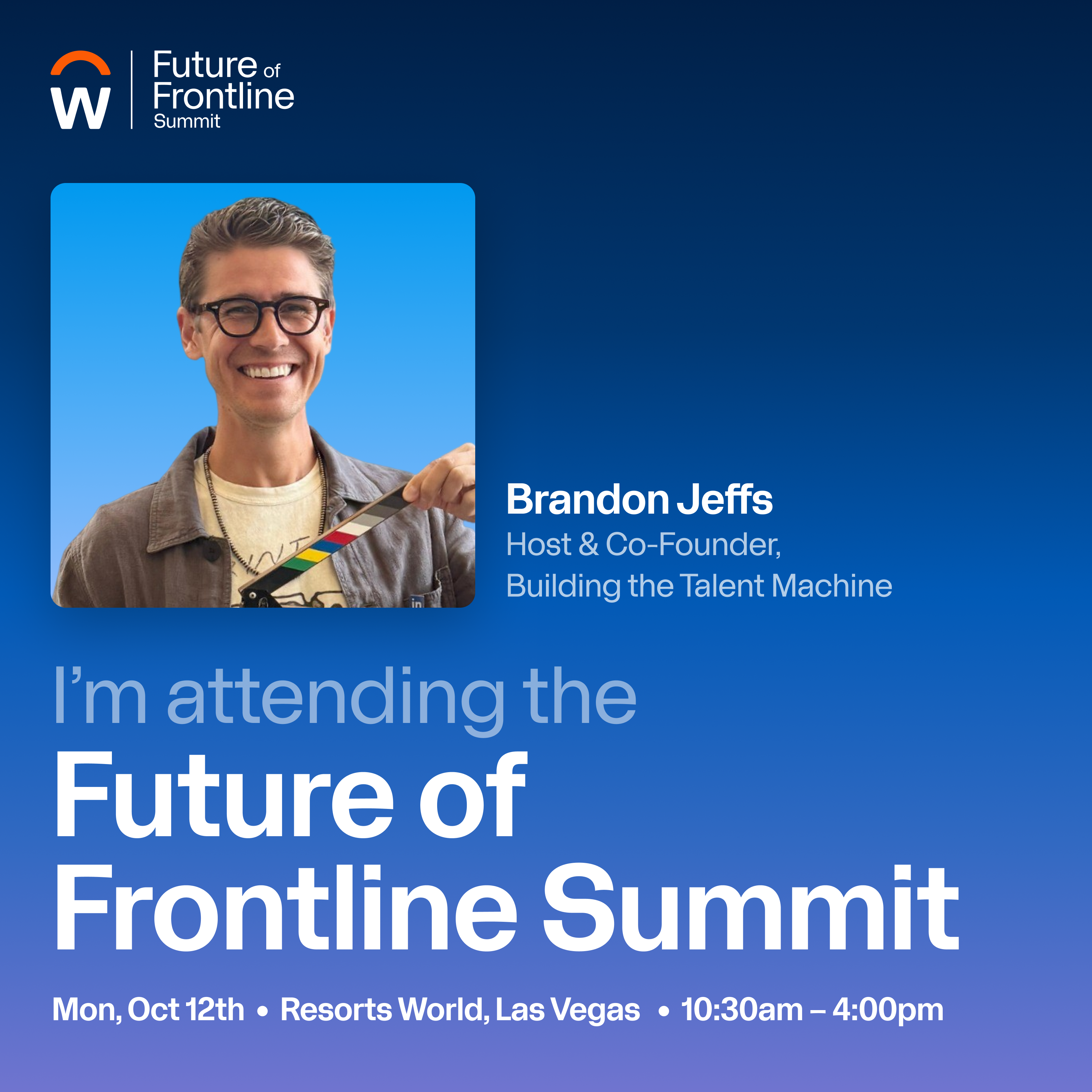
I’m thrilled to be joining forces with Workday for “The Future of Frontline Summit” where 600+ Senior Leaders across HR, HR IT, and Operations across frontline industries will gather before Workday Rising.
Frontline workers make up 80% of the global workforce, and Workday is putting them front and center. By bringing Paradox and their Workforce Management tech together, they are hosting the Future of Frontline Summit on October 12th at Resorts World Las Vegas.
I’ll be there because frontline hiring is where I got my start in the recruiting industry, and technology like Paradox empowers the hiring process for frontline managers. This is the innovation the industry needs right now. I’ll be recording from the floor, so be sure to tune in to the stories I’m stoked to share. Attending? Be sure to say hi. I’ll be the guy with the camera.
When: Monday, October 12 | 10:30 AM - 4:00 PM
Where: Resorts World, Las Vegas (Right before Workday Rising)
https://www.spglobal.com/market-intelligence/en/news-insights/research/2026/02/hr-tech-market-2025
https://www.chartmill.com/stock/markets/usa/industry/63-human-resource-and-employment-services
https://lattice.com/blog/leading-the-way-in-responsible-ai-employment
https://www.wsj.com/business/ernst-young-is-giving-100-million-in-bonuses-to-staff-for-human-skills-9320e93d
https://nwlc.org/resource/our-equal-pay-laws-need-updating-but-the-workplace-advancement-act-would-do-more-harm-than-good/
https://www.axios.com/2026/08/25/openai-says-its-jalapeno-chip-offers-spicy-performance?utm_source=chatgpt.com
https://www.layer3labs.io/ai-model-pricing
https://www.weforum.org/stories/jobs-and-the-future-of-work/chief-people-officers-outlook-2025-rethinking-talent-strategy/
https://www.paradox.ai/clients-stories
https://www.spencerstuart.com/research-and-insight/fortune-500-c-suite-snapshot-2024-profiles-in-functional-leadership


